






AIR CARGO TURKEY – “WE ARE PREFERRED OVER GLOBAL AGENTS BECAUSE OF OUR SERVICE QUALITY”
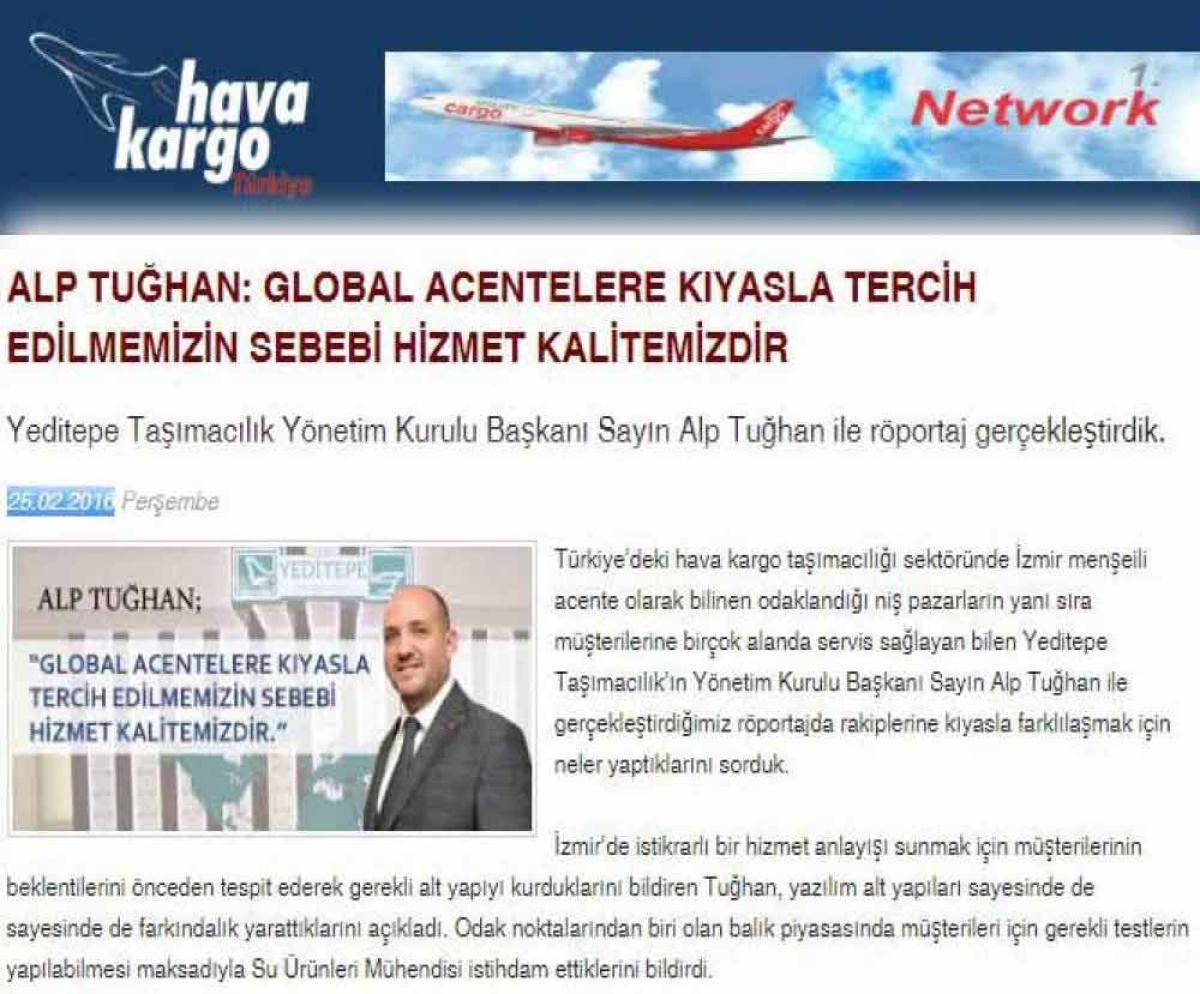
Alp Tuğhan: “The Reason We Are Preferred Over Global Agents Is Our Service Quality”
In an interview with Alp Tuğhan, Chairman of the Board of Yeditepe Transportation Inc., a İzmir-based air cargo agency operating in niche markets, we discussed how the company differentiates itself from global competitors.
Tuğhan stated that they analyze customer expectations in advance and build the necessary infrastructure accordingly to ensure consistent service quality in İzmir. He emphasized that their proprietary software systems create strong operational awareness. In the seafood logistics segment, one of their core focus areas, they employ Aquaculture Engineers to carry out mandatory quality tests for customers.
Born in Istanbul in 1977, Alp Tuğhan has been serving as Chairman of Yeditepe Transportation since 2006.
Regarding weapons and special cargo logistics, Tuğhan explained that they closely follow international regulations, work with specialized personnel and authorized agency networks, and actively participate in global defense fairs.
In live and frozen fish transportation, services start from the exporter’s packaging stage. Temperature controls are conducted at the airport under the supervision of in-house Aquaculture Engineers, and daily reports are shared with both exporters and importers.
Tuğhan highlighted that İzmir has made significant progress in air cargo over the last three years and stated that direct freighter flights—especially to the Middle East—could further strengthen the region’s position.
He emphasized that 100% Turkish capital, 24/7 operations similar to airlines, continuous staff training, and advanced digital systems are the main reasons Yeditepe Transportation is preferred over global agencies.
Tuğhan also expressed satisfaction with Turkish Cargo’s COMIS system transition and described E-Freight as a faster, more secure, and environmentally friendly digital solution. He noted that Turkey-wide adoption would be completed in the second half of 2017.
Finally, he pointed out structural challenges in Turkish air cargo logistics, particularly high extra freight costs for perishable goods, which negatively affect exporters and importers alike.